The moment most agencies get it wrong
You've sold the project. The client is excited. The timeline is tight. And your in-house team is already stretched across three other deliverables.
This is the moment most agencies consider white-label development — and it's also the moment most of them make a decision they'll regret, because they're evaluating the wrong things.
After working as a white-label development partner for agencies in Europe, Australia, and across Asia, we've seen both sides of this relationship clearly. Here's what actually determines whether a white-label partnership works.
The thing agencies evaluate first (and shouldn't)
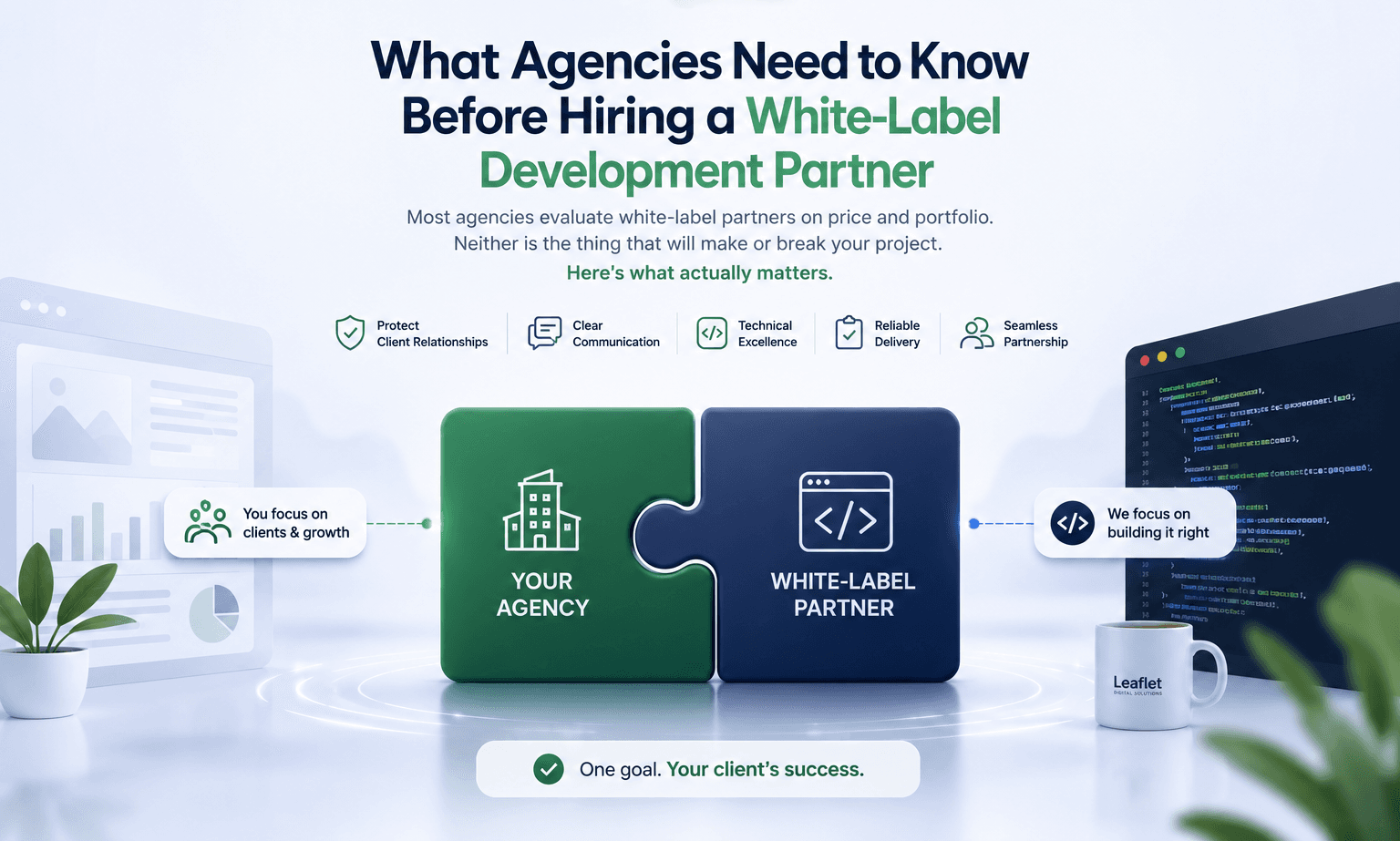
Most agencies compare white-label partners on price and portfolio. Both matter — but neither is the thing that will make or break your project.
The thing that breaks white-label relationships is communication. Specifically: how a development partner handles ambiguity, scope changes, delays, and difficult client feedback — and whether they communicate those things to you in time to act on them, or after it's already a problem.
“A cheap partner who delivers surprises at milestone three is far more expensive than a more expensive partner who flags issues at week two.”
Five questions worth asking before you sign
1. How do you protect my client relationship?
Your client should never know your development partner exists unless you choose to tell them. This means NDAs as standard, communication routed through your channels, deliverables handed over in your brand identity, and zero direct outreach to your client. If a potential partner hesitates on any of these, that's your answer.
2. What documentation will I receive alongside the deliverables?
When the project ends, your agency needs to be able to manage, maintain, and explain what was built — whether or not the original development partner is still involved. Clean code, technical documentation, handover notes, and CMS training materials are non-negotiable. A partner who delivers a finished product with no documentation is setting you up for dependency.
3. Can you absorb scope changes mid-project without rebuilding the timeline?
Client scope changes are inevitable. The question is whether your development partner has the capacity and processes to accommodate them without derailing everything. Ask specifically about their change management process — how changes are priced, approved, and integrated into the existing build.
4. What's your actual availability — not your stated availability?
Many development partners quote turnaround times based on ideal conditions. Ask what their current project load looks like. Ask whether the team working on your project is dedicated or shared across multiple clients. Ask whether availability changes if a larger client comes along.
5. How do you handle a build that isn't going well?
Every project hits friction at some point. What you're evaluating is whether a partner will surface problems early or manage them quietly until they're impossible to hide. Ask for a specific example of a project that ran into difficulty and how they handled it.
The red flags that look like green flags
Fast turnaround quotes
A partner who gives you a detailed, accurate quote within an hour of reading your brief either has a template they're fitting you into, or they haven't thought hard enough about your specific requirements. Good scoping takes time. A quote that arrives too fast usually means you'll be renegotiating scope later.
An enormous portfolio
Volume of work isn't quality of work. Thirty mediocre projects tells you less than five deeply documented case studies. Ask for a walkthrough of one specific project from brief to launch — what went wrong, how they handled it, what they'd do differently.
"We can handle anything"
Generalism is a risk flag in development. The best white-label partners have specific expertise in specific stacks and domains. A team that claims equal proficiency in everything is telling you they haven't developed depth in anything.
What a good white-label relationship actually looks like
When a white-label partnership works well, it feels like an extension of your own team — one that you don't have to manage every day, but can rely on to deliver and flag when something needs your input.
The agency maintains the client relationship and creative direction. The development partner executes with precision and communicates proactively. Deliverables arrive with documentation. Clients are delighted, and they credit your agency.
A note on pricing reality
White-label development from Nepal and South Asia is competitively priced relative to European or North American rates — but the right framing isn't 'cheap offshore development.' It's 'access to strong technical talent at a rate that preserves your margin while delivering quality.'
The economics work when the quality is consistent. They fall apart when you're constantly reworking deliverables or managing client fallout from missed expectations. Price it properly in your client proposal. Build in a reasonable margin. And invest that margin in a partner with a track record worth trusting.
Frequently asked questions
We sign NDAs as standard, work entirely under your brand, use your preferred communication channels, and never reach out to your client directly. All deliverables are handed over in your name. We've built long-term partnerships precisely because agencies trust us to stay invisible.